

Liquid Nitrogen Pipe Freezing Process
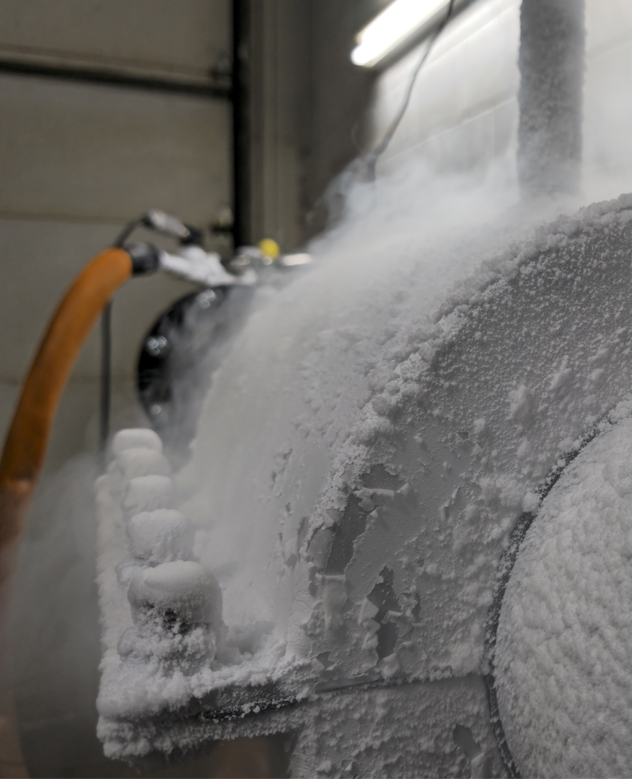
Our liquid nitrogen pipe freezing service allows repairs, replacements or modifications on a network without having to fully drain the system. The freeze creates temporary and controlled isolation, allowing work on a specific section of the piping while reducing downtime and simplifying the logistics of a complete drain.
Service Request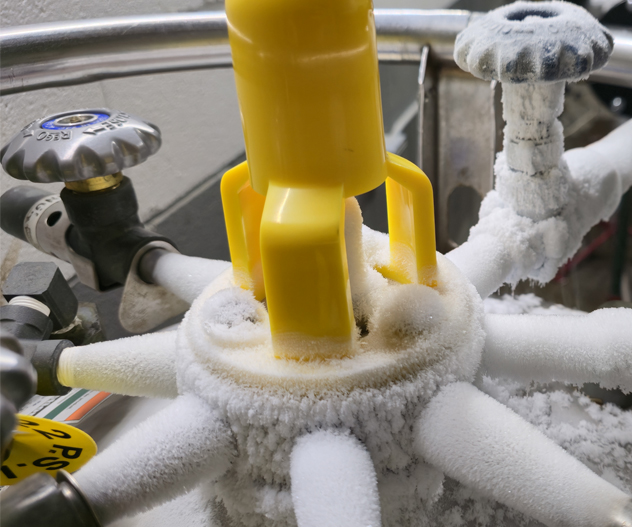
Fast and Safe
Common Applications of Liquid Nitrogen Freezing
- Steam and condensate networks
- Cooling water systems
- Chilled water systems
- Fire protection networks
- Heat exchanger piping
- Hydraulic control piping
- Process piping networks
- Pressure vessel cooling circuits
- Utility and domestic water lines
- Water injection lines
- Sludge and wastewater lines
FAQ – Everything You Need to Know About Liquid Nitrogen Pipe Freezing
1. Is it safe?
Yes. Pipe freezing is a proven technique that has been practiced for more than a century. With a qualified team and a structured work method, safety relies on network assessment, control of the work area, and risk management.
2. What types of fluids are compatible?
In principle, any fluid whose solidification point can be reached down to about -150°C can be frozen. Validation depends on how the fluid behaves when frozen, its additives, its concentration, and the conditions of the network. A technical check is performed in each case.
3. What pipe sizes can be frozen?
Typically, freezing can be applied to pipes ranging from about 1/2 inch up to 36 inches, depending on conditions. The actual capability depends on the material, thickness, accessibility, fluid temperature and residual flow. Sizing is confirmed onsite.
4. How long does the freeze last?
The freeze is temporary, and its duration varies depending on the network, temperature, thermal losses, material and residual flow. Generally, it provides a working window of a few hours. As an example, on a 6‑inch line with a reservoir, a window of around 3 hours can be expected depending on conditions.
5. Is it more economical than a complete drain?
Very often, yes. Freezing reduces labor related to draining, limits fluid losses, decreases downtime and simplifies system restart. The larger, more critical or more complex the network is to drain, the greater the advantage. The exact savings depend on site conditions.